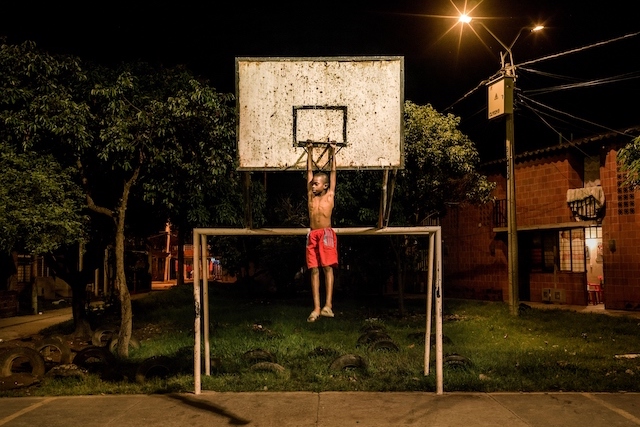
NJC is looking for Nordic photojournalists for a free masterclass in Ukraine, including teaching and coaching, fieldwork, and participation in a photo book in collaboration with Ukrainian colleagues.
With our support, you will produce a photo story under the theme: ‘Healing Ukraine: Human, physical and community recovery five years into the war’.
The Nordic-Ukrainian Photojournalism Programme is a joint initiative between the Nordic Journalist Centre and the Institute for Regional Media and Information (IRMI Ukraine), designed to strengthen regional and local media in Ukraine through professional training. Another aim is to build relationships between Nordic photojournalists and their Ukrainian colleagues.
If you have the right talent and curiosity, we will support you with logistics and coaching led by award-winning mentors Mads Nissen and Thomas Borberg from Denmark’s largest newspaper, Politiken.
Applications open on 14 August 2026
Deadline: 11 September 2026
Background
The programme brings together 14 Ukrainian journalists and photojournalists and five young Nordic photojournalists for a training journey that moves from fundamental skills to editorial mentorship and collaborative storytelling. The first two training sessions are for Ukrainian participants only, most of whom have limited training as photojournalists.
The third activity, the masterclass in Lviv, will bring together both Ukrainian and Nordic colleagues.
The masterclass is free of charge and the following will be covered:
• travel expenses round-trip to Lviv (excepts taxi, trains, busses to and from local airports)
• food and accommodation in Lviv
• insurance in Lviv and during one week of fieldwork in Ukraine
• pocket money for seven days of fieldwork
• the programme will assist in obtaining a visa for Ukraine and the required permissions to work in the country
The work will be published in a photo book under the theme ‘Healing Ukraine’.
Masterclass Programme
3–6 November 2026, Lviv, Ukraine
We will kick-start the masterclass in Lviv.
Over the course of several days, we will analyse picture stories, conceptual documentary photography, and different journalistic approaches, while exploring how various photographic languages can be used to convey a personal vision. Each participant will be mentored and prepared for their upcoming fieldwork.
Furthermore there will be a lecture on how to work in Ukraine. Advice from an experienced Ukrainian reporter.
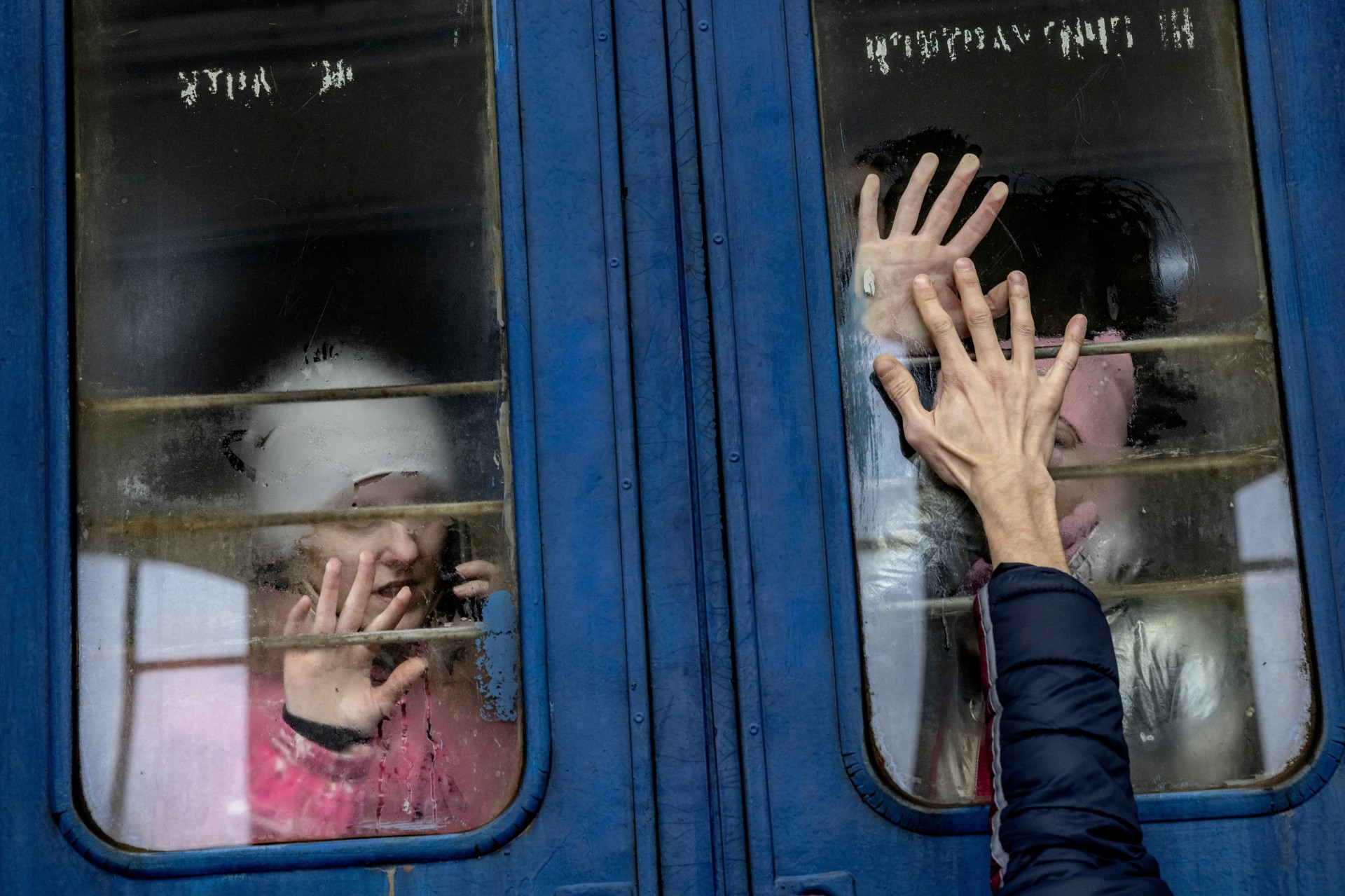
Farewell: Oksana Gonishuk and her children Any, 9, and Illa,13, are saying farewell to their husband and father Yevgeni Gonishuk. Photo: Mads Nissen
Fieldwork
After the start-up, it is time to begin work on your own story.
The workshop provides insurance that covers the Green Zones in Ukraine. This includes all of western and central Ukraine, including Kyiv and Lviv. Eastern Ukraine and frontline regions are not covered, and the project does not include work in these areas.
Yuri Vasiliev, Mads Nissen and Thomas Borberg will be available for coaching and online support during fieldwork.
Colleagues from Ukraine will help with logistics, local fixing, and on-site interpretation.
Who can apply
Participants must be from one of the Nordic countries: Iceland, the Faroe Islands, Greenland, Denmark, Sweden, Norway, Finland and Åland. Up to five Nordic participants will be selected.
Participants must be under 40 years of age.
Participants must have a good command of English.
Participants should have prior experience working in challenging and potentially stressful environments, including situations that require adaptability, resilience and sound judgement.
Participants are expected to work professionally and constructively, with respect for agreed requirements and deadlines.
To apply, please submit:
• Your CV
• A short description of your photographic interests and motivation (maximum half a page)
• 20 selected photographs. You may submit either photo stories or individual images. The selection should demonstrate your visual voice, talent and interests. Images must be submitted as JPG files and should be approximately 5 MB each.
Applications must be submitted via WeTransfer to both:
• info@madsnissen.com
AND
• Thomas.Borberg@pol.dk
Submit your application between 14 August and 11 September 2026 at 12.00 noon (CEST – Scandinavian time).
Selection Process
Applicants will be assessed on their professional background, the strength of their published visual work, and their motivation.
Questions
For questions about the programme or the application process, please contact: John Frølich, Head of Nordic Journalist Centre, at jf2@dmjx.dk or Mads Nissen, Politiken, at info@madsnissen.com
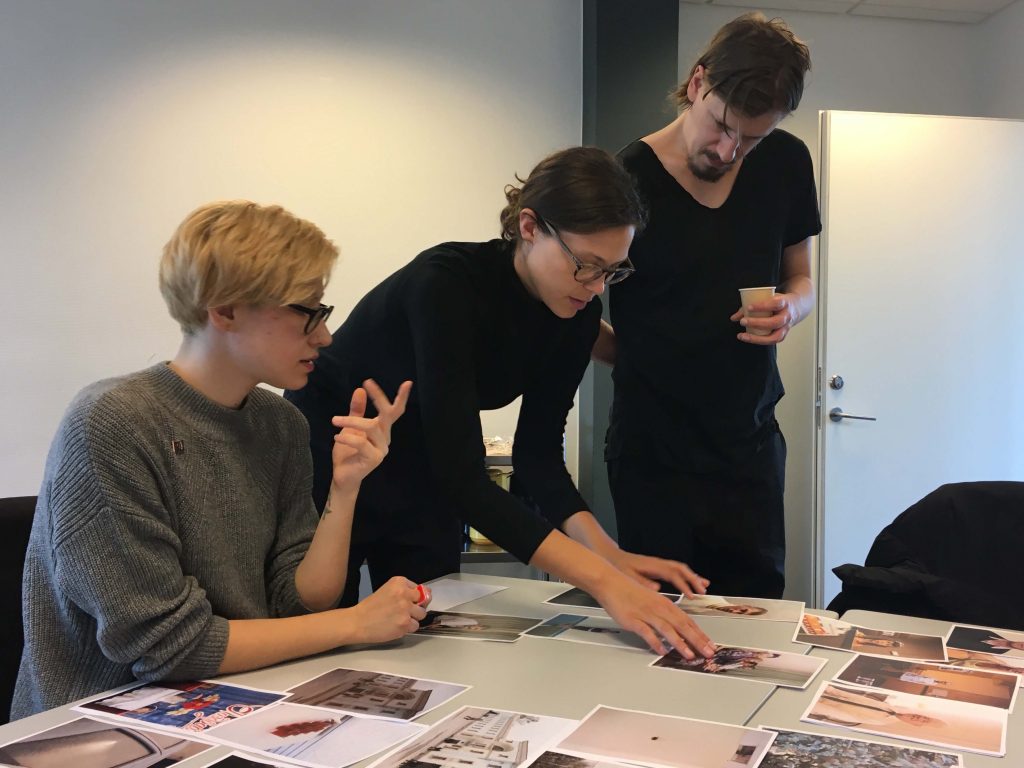
Participants in “Next to Me” in 2017/18 select images for a shared photo book. From left: Mary Gelman, Sofie Amalie Klougart, and Christian Belgaux. Photo: Mads Greve.
The photojournalism program is led by:
Yuri Vasyliev, Visual Journalism Programme Manager, at Institute for Regional Media and Information (IRMI Ukraine). Yuri has extensive experience in photojournalism and MOJO training. Yuri accompanies participants throughout the full program, in both Lviv and Aarhus.
Søren Pagter, head of Photojournalism Programmes at DMJX
Søren will be responsible for the advanced program in Aarhus in September. Søren is also the author of a book about photojournalism “The Essential Photograph”, which NJC has translated into Russian: ТАКОЕ ВАЖНОЕ ФОТО. More: Søren Pagter, DMJX
Mads Nissen, staff photographer at Politiken
Mads is one of Denmark’s most prominent and successful photojournalists. He is the winner of a multitude of awards, including the World Press Photo three times (2015, 2021 og 2023). More: www.madsnissen.com
Thomas Borberg, staff photographer at Politiken
Thomas brings experience from previous roles at Danish School of Media and Journalism. World Press Photo Foundation, Årets Pressefoto and World Press Photo. Thomas Borberg holds a 1996 – 2000 Bachelor’s degree in Photojournalism. With a robust skill set that includes Newspaper, Editorial, Magazines, Photojournalism, Journalism and more. More: Thomas Borberg, Creative Photo Awards 2026
Photos: Mads Nissen
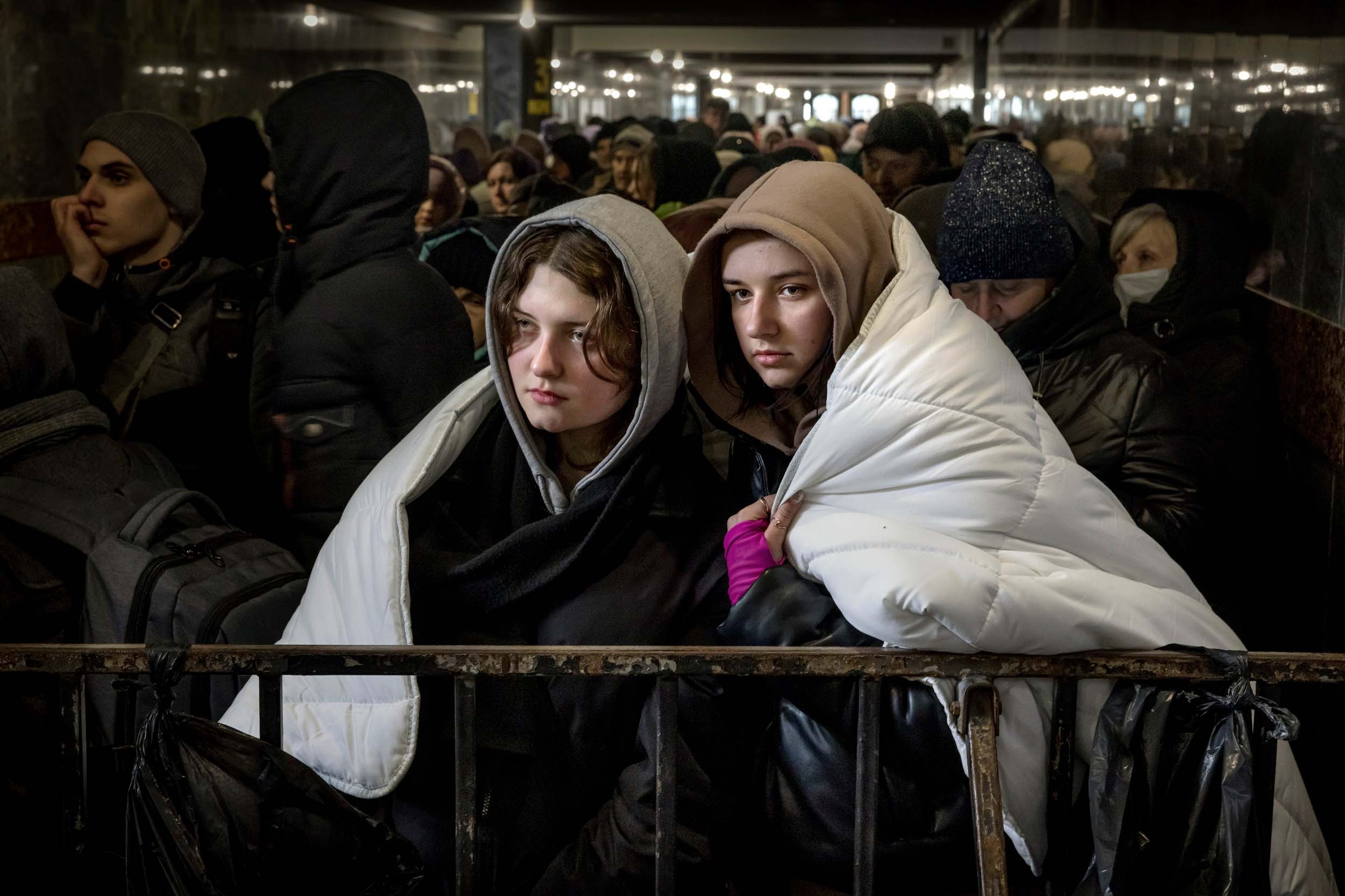
The train station in Lviv is the main hub for for refugees trying to escape the war in Ukraine. Mainly to Poland. Trains comes from all over the country and the thousands of mostly woman and children have to wait for 8, 12 and 24 hours in long queues despite the freezing cold.
The full story: Toget, der river to hjerter fra hinanden (in Danish)
Støtte og samarbejde
NJC har modtaget støtte til dette forløb fra Nordisk Ministerråd.