
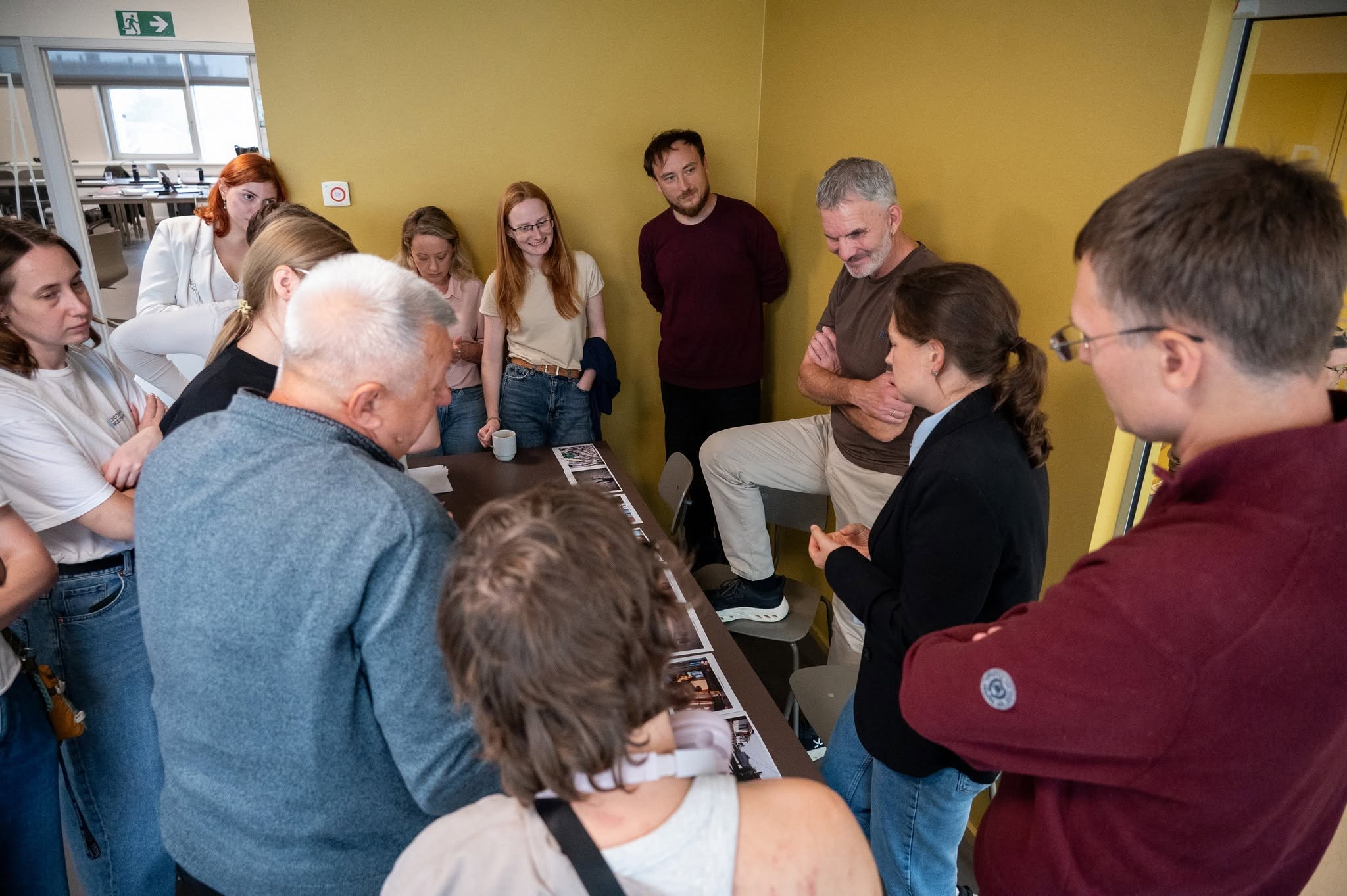
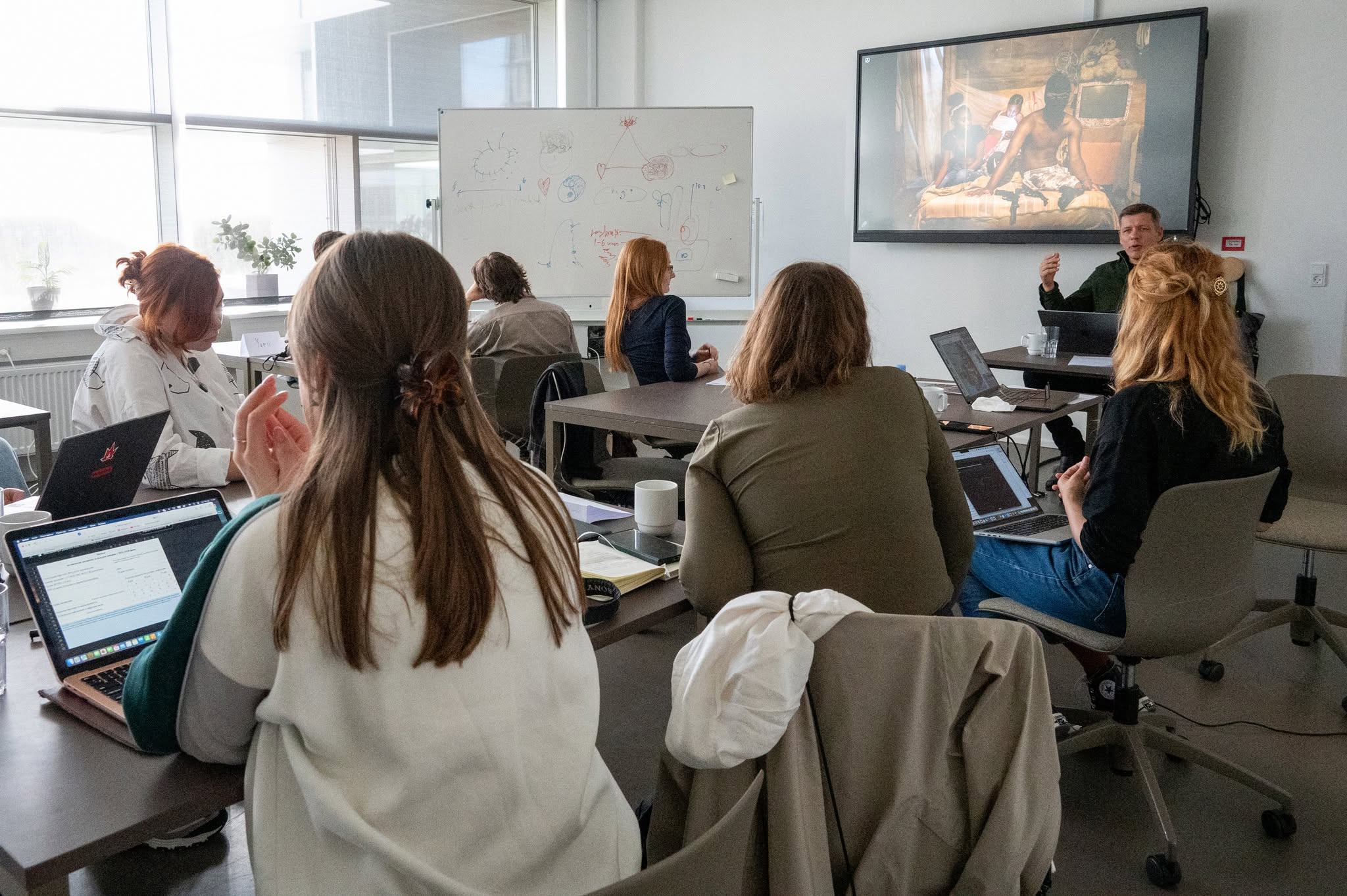
Training in photojournalism has equipped a group of Ukrainian journalists to produce better visual stories. Their next task is an ambitious photo book about the healing process in Ukraine, focusing on human resilience and recovery and the rebuilding of local communities and infrastructure during the long war of attrition.
By Kristoffer Dahl Sørensen
Photographer and photojournalism trainer Yuri Vasiliev has more than 20 years of experience in photography and television production. He took part in the training programme in Aarhus alongside the group. Although photojournalism certainly exists in Ukraine, particularly in the form of war photography, it is not an independent professional discipline as it is in the Nordic countries. Yuri Vasiliev therefore found the training programme valuable in many ways.
“We learnt that a photo story is not just a collection of good photographs. It needs structure, logic, rhythm and variety. We also learnt a great deal about how to build a story and make it visually engaging for the audience. A presentation on genres and types of storytelling was particularly useful because it gave us a better understanding of the different storytelling tools available to us,” he says.
Emotion and understanding matter most
At most regional media outlets in Ukraine, journalists have to handle many different tasks and take their own photographs, just as journalists in the Nordic countries do because of cutbacks. As a result, many Ukrainian journalists produce visual content, but often without sufficient professional training in visual storytelling, according to Yuri Vasiliev.
“We know how to create a technically correct or visually attractive image, but there is still a great need to develop a deeper understanding of how photographs can tell stories, create meaning and work together as a coherent photo narrative,” he says.
Over four days, the group received training and coaching from Søren Pagter, Head of Photojournalism at DMJX, as well as Mads Nissen and Thomas Borberg – two award-winning photojournalists from the Danish newspaper Politiken. Yuri Vasiliev says he is taking a great deal of inspiration and knowledge back to Ukraine.
“Overall, the training programme taught me that a strong photograph is not primarily about creating a beautiful image. A camera is merely a technical tool. Real photography begins with what the photographer sees, feels and understands. We need to make people feel something and understand what the image is telling them,” he continues.
New Workshop and Photo Book on the Way
The training programme in Aarhus is part of the Nordic-Ukrainian Photojournalism Programme, organised by Nordic Journalism Centre together with the Ukrainian partner, the International Institute for Regional Media and Information (IRMI). The programme receives financial support from the Nordic Council of Ministers and the Nordic investment bank NEFCO. Before coming to Aarhus, the Ukrainian participants had attended their first introductory workshop in the western Ukrainian city of Lviv in August. The work they produced there formed the basis for the coaching and feedback they received in Aarhus.
NJC initiated the training programme and the project. John Frølich, Head of NJC, has spent more than a year preparing it, so it was a great pleasure for him to see the young Ukrainians in the safe surroundings of Aarhus and to experience how actively they participated in the training.
“Good photojournalism is essential because it provides a credible and authentic link between reality and the audience. Photographs can engage readers emotionally and appeal to our empathy in a completely different way than words alone can,” says John Frølich.
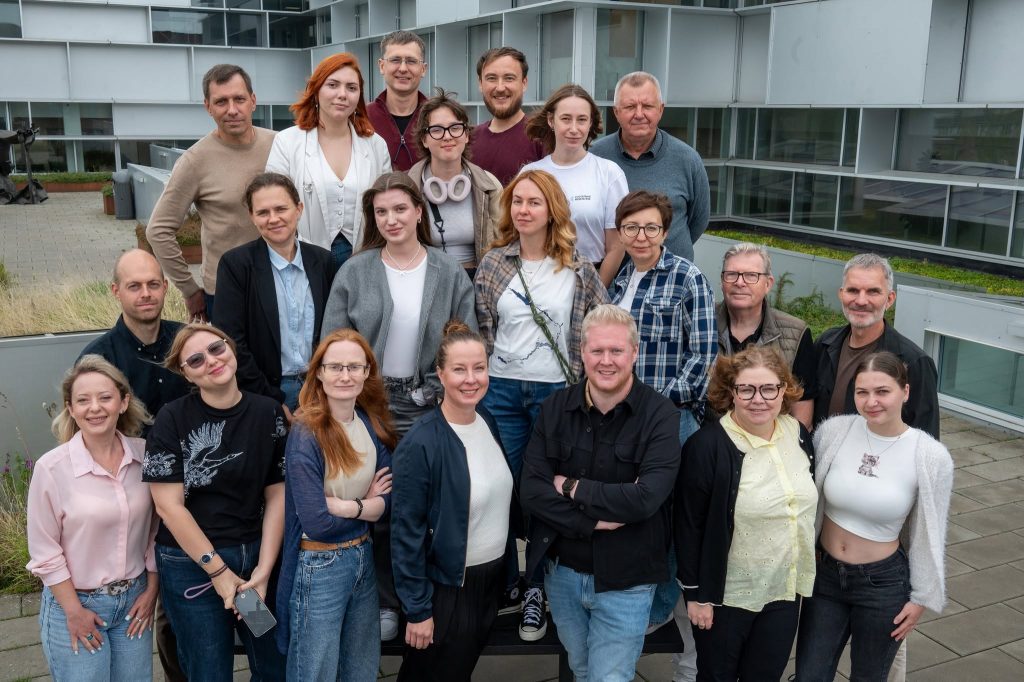
The entire group of Ukrainian journalists attending the NJC course, together with trainers and course leaders. Photo: DMJX
In November, the Ukrainian participants will meet again in Lviv, this time joined by five Nordic photojournalists who are currently being selected. During the third and final workshop, the Ukrainian and Nordic photojournalists will collaborate on a series of photo essays and stories from across Ukraine, which will be brought together in a bilingual photo book about Ukraine.
The book will centre on the theme “Healing Ukraine: Human, physical and community recovery five years into the war”, and is scheduled for publication in 2027.
“The photo book is an ambitious project, and we hope it will attract considerable attention. It is unfortunate that media outlets both in the Nordic countries and Ukraine have made such drastic cuts to their photographic coverage. Local and regional media in Denmark have closed their photography departments, leaving the task to other journalists. Our programme can help ensure that Ukrainian media – including local media – improve the quality of their photographic coverage,” says John Frølich.
